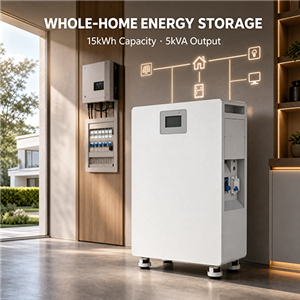
15kw residential energy storage solar battery backup for home



- 9SUNSOLAR
- Xiamen,Fujian
- 7days(≤10pcs)
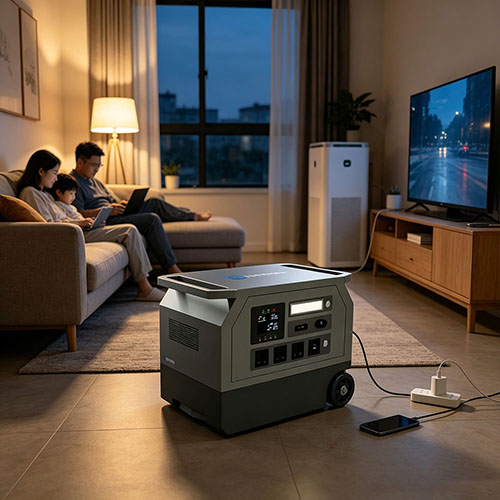
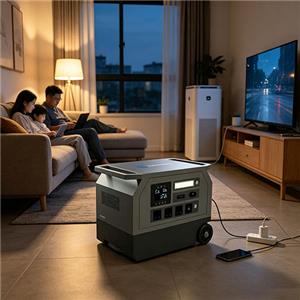
When the outage is on a timetable Outages here are not emergencies, they are scheduled. You know it starts at 20:00, so you switch the AC on early and stop opening the fridge. Fifteen kilowatt-hours is what keeps that evening ordinary — AC, fridge, lights and a TV for six hours, with charge left in the morning. Nobody in the house has to rearrange their day.
The panels that were selling for almost nothing By eleven in the morning, a 9kW roof is already producing more than the house can use, and the surplus goes back to the grid at an export rate that barely covers the paperwork. The 9,000W MPPT turns that surplus into stored kilowatt-hours instead. Dinner and the air conditioning after sunset come out of the pack, not out of the bill.
The generator you would rather not start A diesel set that runs forty hours a month is a set that sits waiting the other 690, with fuel going stale and the neighbours listening. This unit accepts 90–280V from a generator, so the night gets carried quietly on battery and the generator only runs in the morning to top it up. It goes back to being the backup instead of the routine.
Description:
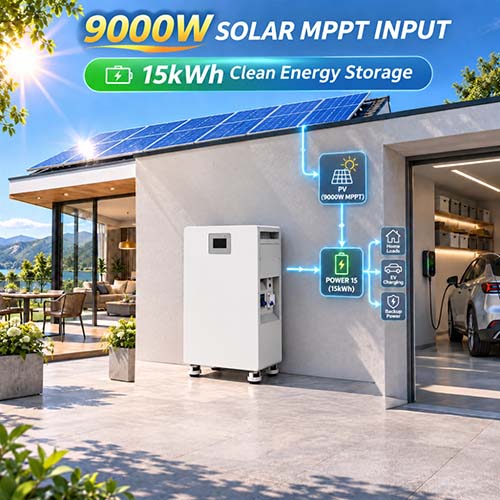
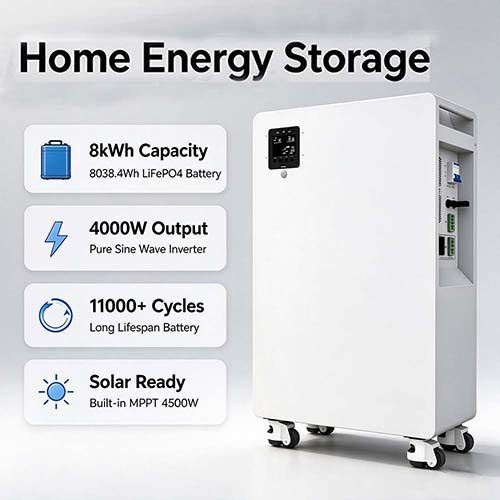
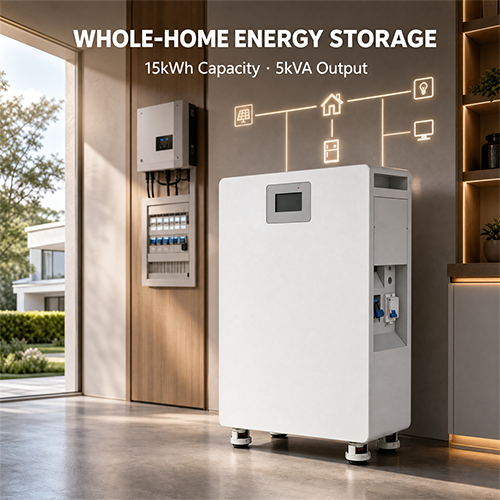
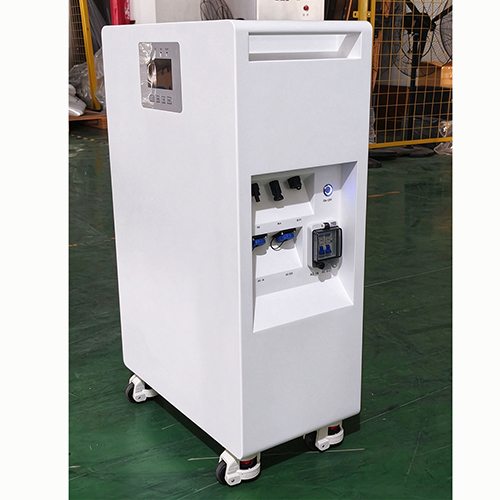
The POWER 15 puts fifteen kilowatt-hours of lithium iron phosphate storage, a 5kVA hybrid inverter and a 9,000W solar charger into one floor-standing cabinet, so a house gets backup power without a battery rack and a wall of separate boxes. On a normal day it lives off the panels; when the grid sags.
| Battery Capacity | 25.6V,15,027.2Wh |
| Battery Type | Lithium Iron Phosphate, 8*587Ah |
| Maximum Input Power | 9000W |
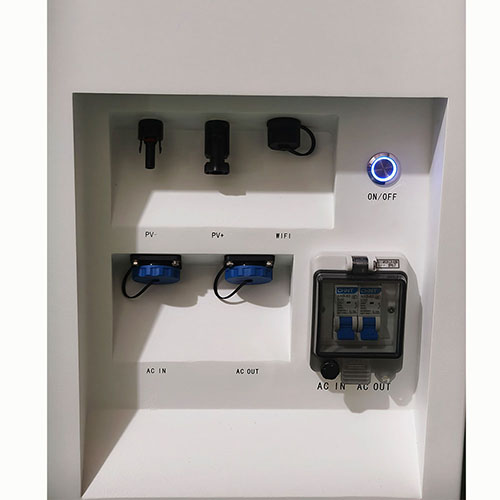
| Protection Level | IP54 |
| Max Open‑circuit Voltage | DC 500V |
| Rated AC Input Voltage | 230VAC |
Key Advantages:
1. Fifteen kilowatt-hours changes what "backup" means For most households that is the line where residential energy storage stops being a gadget for the router and starts carrying the actual house: a fridge, a pump, one air conditioner, the lights nobody thinks about. At 1,000W of load it runs roughly fifteen hours.
2. One cabinet instead of three purchases A solar battery backup system for home usually means a battery bank, a hybrid inverter, a charge controller and the cable between them. Here they share one 580 × 330 × 956mm steel box, which is the difference between a wiring job and a project.
3. A 9,000W solar input that doesn't ask you to shrink the array The MPPT tracks between 60 and 450V at up to 27A and 500V open-circuit, at 99.5% tracking efficiency. As solar battery backup for home setups go, that is enough panel to cycle the pack on sunshine alone in most climates, and it lands on one input.
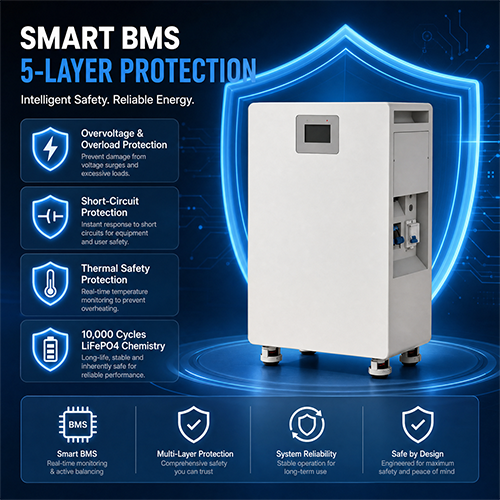
4. The battery is the part you shouldn't have to think about Eight 587Ah LFP cells, rated 10,000 cycles at full depth of discharge to 70% of original capacity. As a home energy storage battery, daily deep cycling is the design case rather than an exception — and standby draw stays under 35W, so it isn't quietly eating what it stored.
5. It keeps working when the grid doesn't behave The AC input takes 90–280V in generator mode, which means a sagging supply and a running generator both count as "grid". Transfer is 10ms in UPS mode, and the IP54 steel cabinet means solar backup power for home can go in a garage or plant room instead of a space with its own climate control.
Factory:

Certificate:

Exhibition:

FAQ:
A4: Yes. The AC input charges from the grid at up to 21.7A, so the unit works as a straight grid-charged battery. Panels can be added to the MPPT input later without changing anything else.