Is a Private Solar Farm Worth It?
Introduction
Imagine you're a factory owner in Germany, and your electricity bill just doubled due to grid fees and volatile spot prices. You've heard about private solar farms—but is it worth the investment? The short answer: yes, if you approach it strategically. A private solar farm, when designed with the right technology and financing, can slash energy costs by 40-60%, provide reliable power, and even generate new revenue streams. In this blog, we'll explore the technical and economic realities, with insights from Xiamen 9Sun Solar Technology Co., Ltd, a leader in innovative solar solutions.
Pain Points
1. Grid Instability and Power Quality Issues

Scenario: A manufacturing plant in Italy experiences frequent voltage dips and outages, causing production halts and equipment damage. Impact: Each outage costs €50,000 in lost production and restart expenses. Over a year, this adds up to €200,000. Additionally, grid connection upgrades are expensive and slow.
2. Rising Energy Costs and Price Volatility
Scenario: A cold storage facility in Spain faces energy costs that fluctuate 30% seasonally. Impact: Budgeting becomes impossible, and profit margins erode. The facility pays €0.18/kWh on average, but peaks at €0.25/kWh, adding €100,000 annually compared to a fixed-rate PPA.
3. Underutilized Land and Sustainability Goals
Scenario: A farm in the UK has 50 hectares of marginal land not suitable for crops. Impact: The land generates minimal income, and the farm misses sustainability targets. Without solar, they forgo £30,000/ha in potential revenue over 25 years.
Solutions
1. Microgrid with Battery Storage
For grid instability, a private solar farm coupled with battery storage creates a microgrid that can island from the grid during outages. Xiamen 9Sun Solar provides advanced inverters and lithium-ion batteries with seamless switching (<20ms), ensuring uninterrupted power. The system also provides voltage support and frequency regulation, improving power quality.
2. Power Purchase Agreements (PPAs) and Fixed-Rate Financing
To mitigate price volatility, a private solar farm can be financed through a PPA, where a third-party investor owns the system and sells power at a fixed rate (e.g., €0.10/kWh for 20 years). Xiamen 9Sun Solar partners with financiers to offer turnkey PPAs, eliminating upfront costs and locking in savings.
3. Agrivoltaics and Dual-Use Land
For underutilized land, agrivoltaics combines solar panels with agriculture (e.g., sheep grazing or shade-tolerant crops). Xiamen 9Sun Solar designs elevated mounting structures that allow farming beneath, increasing land productivity by up to 60%. The farm can generate solar revenue while maintaining agricultural output.
Case Studies
Case 1: Müller Manufacturing, Germany
Müller Manufacturing, a auto parts supplier in Bavaria, faced grid instability causing 10 outages per year, each costing €80,000. They installed a 2MW private solar farm with 1MWh battery storage from Xiamen 9Sun Solar. Result: Outages eliminated, saving €800,000 annually. Additionally, they reduced energy costs by 45% through self-consumption. "The microgrid solution paid for itself in 3 years," says Hans Müller, CEO.
Case 2: FreshCold Logistics, Spain
FreshCold, a cold storage company in Valencia, struggled with volatile energy prices. They signed a 20-year PPA with Xiamen 9Sun Solar for a 1.5MW private solar farm. Result: Fixed electricity rate of €0.09/kWh, saving €120,000 per year compared to grid prices. "We can now budget accurately and focus on growth," says Maria Lopez, CFO.
Case 3: GreenFields Farm, UK
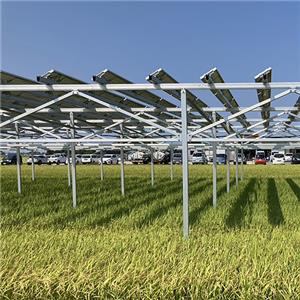
GreenFields Farm in Cornwall had 20 hectares of marginal land. They implemented an agrivoltaic system with Xiamen 9Sun Solar's elevated panels, allowing sheep to graze beneath. Result: Solar revenue of £40,000 per year plus continued agricultural income, increasing total land yield by 50%. "It's a win-win for our business and the environment," says James Smith, owner.
Case 4: AquaTech Desalination, California, USA
AquaTech, a desalination plant in San Diego, faced high energy costs (€0.20/kWh) and grid reliability issues. They installed a 3MW private solar farm with 2MWh battery storage from Xiamen 9Sun Solar. Result: 60% of energy from solar, saving $500,000 annually, and backup power during grid outages. "The system is robust and maintenance-free," says John Davis, Operations Manager.
Case 5: Nordic Data Centers, Sweden
Nordic Data Centers in Stockholm needed to reduce carbon footprint and ensure 100% renewable power. They built a 5MW private solar farm with Xiamen 9Sun Solar's high-efficiency modules. Result: 80% renewable energy, reducing carbon emissions by 3,000 tons/year, and saving €300,000 annually. "Xiamen 9Sun's technology is top-notch," says Erik Johansson, CTO.
Applications and Partners
Private solar farms are ideal for:
- Industrial manufacturing (reduce costs, improve reliability)
- Cold storage and logistics (stabilize energy expenses)
- Agriculture (agrivoltaics for dual income)
- Desalination (energy-intensive, high solar potential)
- Data centers (sustainability and cost control)
Xiamen 9Sun Solar Technology Co., Ltd collaborates with leading procurement partners such as SolarBuy EU and GreenTech Distributors, ensuring high-quality components and local support. Their partnerships with financial institutions enable flexible PPAs, making private solar farms accessible to businesses of all sizes.
FAQ
Q1: What maintenance is required for a private solar farm?
A: Minimal. Regular cleaning (every 6-12 months) and annual inverter checks. Xiamen 9Sun Solar offers remote monitoring and 24/7 support. Expect O&M costs of ~€5/kW/year.
Q2: How do I size a battery storage system?
A: Size based on critical loads and outage duration. For grid instability, 2-4 hours of backup is typical. Xiamen 9Sun Solar provides simulation tools to optimize.
Q3: Can I connect a private solar farm to the grid?
A: Yes, with net metering or feed-in tariffs. Requirements vary by country. Xiamen 9Sun Solar handles grid interconnection applications.
Q4: What is the lifespan of a private solar farm?
A: Solar panels last 25-30 years; inverters 10-15 years. With proper maintenance, the system can operate for 30+ years.
Q5: How does agrivoltaics affect crop yields?
A: With elevated panels (3-4m), crops receive sufficient light. Studies show yield reductions of 10-20% for shade-tolerant crops, but overall land productivity increases by 50-60% due to solar revenue.
Conclusion & CTA
A private solar farm is not just worth it—it's a strategic investment that addresses energy costs, reliability, and sustainability. With Xiamen 9Sun Solar Technology Co., Ltd's expertise and innovative solutions, you can tailor a system to your needs. For a deeper technical analysis, download our whitepaper "Private Solar Farms: Technical and Economic Guide" or contact our sales engineers for a consultation.