
Flat Roof Solar Mounting System: Types, Benefits and Installation Guide
Flat roofs were long considered wasted space on commercial buildings. Today, a flat roof solar mounting system is turning those unused surfaces into on-site power plants for warehouses, factories, offices and retail parks. This guide looks at what flat roof solar racking is, the designs available, and why solar panel mounting on flat roof structures has become one of the fastest-growing segments of the commercial solar market.
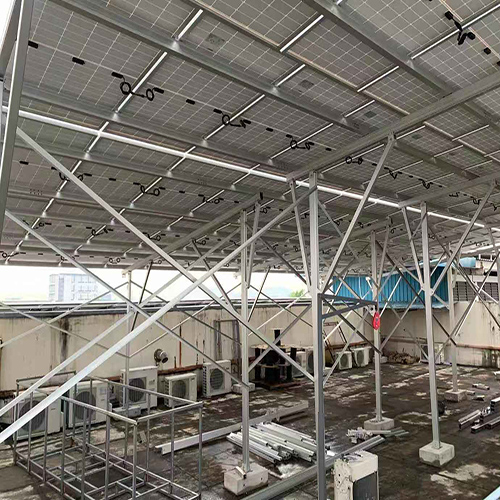
What Is a Flat Roof Solar Mounting System?
A flat roof solar mounting system is a support framework that holds photovoltaic panels in place on roofs with little or no pitch. Because the roof offers no natural incline, flat roof solar racking raises each row of modules at a calculated tilt so they face the sun for most of the day. The majority of low-slope installations use a ballasted layout, in which concrete blocks provide the holding force instead of bolts driven through the membrane.
This is why flat roof solar panel installation is fast, clean and fully reversible. The roof covering is never cut or pierced, so the original waterproofing guarantee stays valid, and the array can be expanded or removed later without any trace.
Why Commercial Buildings Choose Rooftop Solar
Commercial and industrial properties are the biggest users of solar mounting systems for flat roofs. Their rooftops are wide, open and largely free of shade, which makes planning straightforward. For warehouse and factory owners, a ballasted solar mounting system converts idle roof area into predictable electricity savings while keeping operations completely undisturbed below.
Rows are carefully spaced and tilted in modern flat roof solar racking to limit self-shading and leave room for cleaning. On white or reflective roof membranes, panels also run cooler, which helps a commercial rooftop solar installation deliver output close to the module's rated performance.
The Main Types of Flat Roof Solar Racking
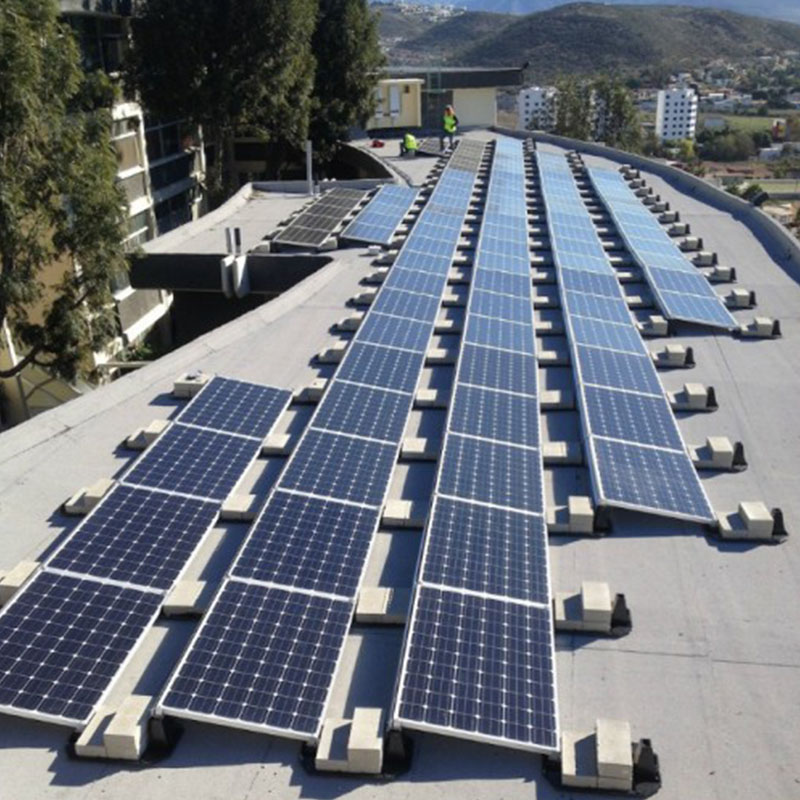
1. Ballasted solar mounting system — the standard for most commercial roofs. Concrete blocks or ballast trays hold the array down with no roof penetration. It suits roofs with a load allowance of roughly 10–15 kg/m² or more and is the most popular non-penetrating solar mounting option.
2. Mechanically attached system — rails are anchored directly to the roof deck with waterproof flashings. This type fits roofs with lower load capacity or sites exposed to very strong wind.
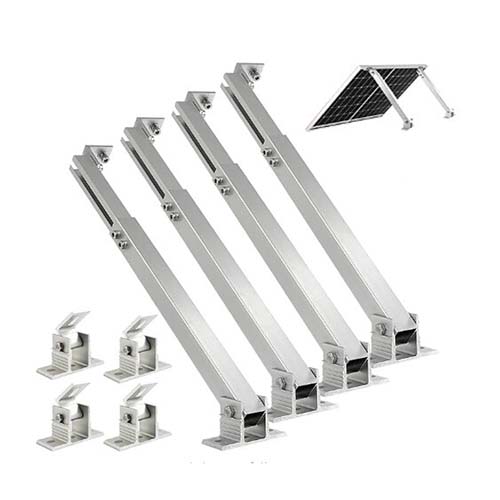
3. Adjustable-tilt system — the panel angle can be set on site, letting installers fine-tune seasonal performance without re-engineering the full layout.
What a Complete Mounting Kit Contains?
A ready-to-install flat roof solar mounting system typically includes aluminum or galvanized steel rails, mid and end clamps, T-bolts and nuts, rubber or EPDM protection pads, wind deflectors, and precast or on-site concrete ballast. Anodized aluminum is the preferred rail material because it is light, corrosion resistant and reliable even in coastal climates. Kits that arrive pre-assembled cut on-site labor significantly.