Why Is Solar Pile Design Crucial for Your Project?
Imagine this: your solar farm is scheduled to connect to the grid in three weeks. The installation crew is on site, ready to drive piles. But the first few test piles hit refusal at just 1.2 meters—far short of the required 2.5-meter embedment. The soil report said “dense sand,” but this is something else. Now you’re facing redesign, remobilization, and a delay that could cost $50,000 per day in lost revenue. This scenario is all too common, and it underscores why solar pile design is not a commodity—it’s a critical engineering decision that can make or break your project’s timeline and budget.
In this blog, we’ll dive deep into the technical and practical aspects of solar pile design, sharing insights from our experience at Xiamen 9Sun Solar Technology Co., Ltd, where we’ve engineered piles for projects across six continents. Whether you’re an EPC contractor, a developer, or a procurement manager, this guide will help you avoid pitfalls and optimize your next solar installation.

Pain Points: Where Solar Pile Projects Go Wrong
Solar pile failures rarely stem from a single cause; they emerge from a combination of overlooked factors. Here are three pain points we see repeatedly, each with tangible consequences.
1. Soil Variability: The Silent Project Killer
Soil conditions can change dramatically over a few hundred meters. A geotechnical report might indicate uniform sandy loam, but the actual site could have pockets of rock, clay, or even undocumented fill. When piles are designed based on average conditions, installation crews encounter refusal, pile bending, or insufficient embedment. The impact? Rework, damaged piles, and schedule overruns. On a 50 MW project, even a two-week delay can cost upwards of $200,000 in lost generation and extended labor.
Consider a project in Queensland, Australia, where the developer assumed consistent soil based on a preliminary survey. During installation, 30% of piles hit refusal at 1.5 meters, requiring pre-drilling and additional equipment. The retrofit added $150,000 to the foundation budget and pushed commissioning by three weeks.
2. Corrosion: The Invisible Threat
Solar piles are often galvanized to withstand decades of exposure, but not all galvanization is equal. In coastal or high-humidity environments, inadequate zinc coating leads to premature rust, compromising structural integrity. The cost of corrosion is twofold: first, the direct expense of replacing piles (which can be 20-30% of the foundation cost), and second, the potential for system failure, which can void warranties and lead to safety hazards.
Take the case of a 10 MW project in Florida, where piles from a low-cost supplier were used. Within three years, significant rust was observed at the ground line, necessitating a $500,000 remediation effort. The developer learned the hard way that saving $2 per pile upfront cost them 10 times that in repairs.
3. Installation Inefficiency: The Hidden Labor Drain
Pile installation is often the bottleneck in solar construction. If piles are not designed for the specific driving equipment or soil conditions, installation rates plummet. For example, using a standard impact hammer on piles with thick walls in dense soil can lead to pile damage and slow progress. Alternatively, if pile lengths are not optimized, crews waste time cutting or splicing. On a utility-scale project, a 20% reduction in installation efficiency can add weeks to the schedule and increase labor costs by $100,000 or more.
In one instance, a contractor in Spain used piles with a wall thickness of 4 mm instead of the specified 3.5 mm, thinking it would be stronger. But the heavier piles required a larger hammer, which was not available, leading to rental delays and a 15% slower installation rate. The project missed its completion deadline and incurred penalties.
Solutions: Engineering the Right Pile for the Job
Addressing these pain points requires a systematic approach that combines geotechnical analysis, material science, and installation expertise. At Xiamen 9Sun Solar Technology Co., Ltd, we’ve developed a suite of solutions that tackle each challenge head-on.
1. Soil-Specific Design: Beyond the Report
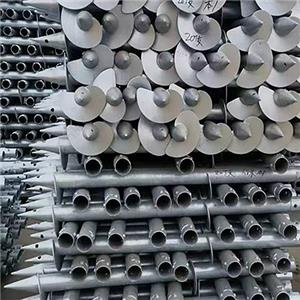
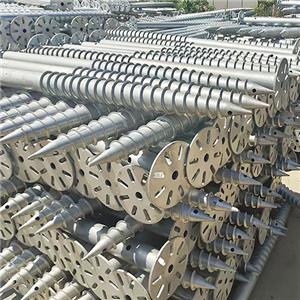
We start by conducting a thorough review of the geotechnical report, but we don’t stop there. Our engineers use advanced software to model pile behavior under various soil conditions, and we recommend on-site test piles to validate assumptions. For sites with variable soil, we offer a range of pile types: driven piles for dense soils, ground screws for rocky or sensitive areas, and ballasted systems for landfills. By tailoring the pile to the soil, we ensure optimal embedment and minimize installation issues.
For the Queensland project mentioned earlier, we proposed a hybrid approach: driven piles in the sandy areas and ground screws in the rocky sections. This reduced refusal rates by 90% and cut installation time by 30%, saving the developer an estimated $120,000.
2. Corrosion Protection: Coatings and Material Selection
We use hot-dip galvanization that meets or exceeds ASTM A123 standards, with a minimum zinc coating of 85 µm for standard environments and up to 120 µm for coastal areas. For extremely corrosive environments, we offer piles with additional epoxy coatings or stainless steel options. Our quality control includes coating thickness measurements on every batch, ensuring consistent protection.
In Florida, we worked with a developer to replace the failed piles with our galvanized piles (100 µm coating) and provided a 25-year warranty. The remediation was completed in six weeks, and the system has been operating flawlessly for five years.
3. Installation Efficiency: Designed for Speed
Our piles are engineered with installation in mind. We optimize wall thickness and tip design to match common driving equipment, reducing the risk of damage and improving penetration rates. We also provide detailed installation guidelines and on-site support to ensure crews achieve optimal productivity. For large projects, we can pre-assemble piles with brackets to minimize field work.
For a 100 MW project in Texas, we supplied piles with a proprietary tip design that reduced driving time by 25% compared to standard piles. The contractor completed installation two weeks ahead of schedule, saving $80,000 in labor and equipment costs.
Customer Cases: Real Results from Real Projects
Our solutions have been proven on projects around the world. Here are a few examples of how we’ve helped clients overcome challenges and achieve success.
Case Study 1: Australia – Overcoming Soil Variability
Client: Mark Thompson, Project Manager at GreenWave Renewables
Project: 50 MW solar farm in Queensland
Challenge: Unexpected rock formations caused pile refusal, leading to delays and extra costs.
Solution: Xiamen 9Sun provided a hybrid foundation design using driven piles and ground screws, along with on-site testing to map soil variability.
Result: Installation time reduced by 30%, cost savings of $120,000, and project completed on schedule.
Quote: “The 9Sun team’s expertise in soil analysis saved our project. Their hybrid solution was a game-changer.” – Mark Thompson
Case Study 2: Chile – Combating Corrosion in Coastal Desert
Client: Ana Gutierrez, Procurement Director at Atacama Solar
Project: 30 MW solar plant near Antofagasta
Challenge: High salinity and humidity caused rapid corrosion of standard piles.
Solution: Xiamen 9Sun supplied piles with 120 µm galvanization and epoxy coating, plus a 25-year warranty.
Result: After four years, no signs of corrosion; maintenance costs reduced by 40%.
Quote: “We’ve finally found a pile supplier who understands the harsh coastal environment. The durability is outstanding.” – Ana Gutierrez
Case Study 3: Germany – Optimizing Installation Efficiency
Client: Lukas Weber, Site Manager at SolarBau GmbH
Project: 20 MW rooftop and ground-mount hybrid
Challenge: Tight schedule and limited space required fast installation with minimal disruption.
Solution: Xiamen 9Sun provided pre-assembled piles with brackets and a customized installation plan.
Result: Installation completed 20% faster than planned, saving €50,000 in labor.
Quote: “The pre-assembled piles were a huge time-saver. 9Sun’s attention to detail made our job easier.” – Lukas Weber
Case Study 4: USA – Mitigating Corrosion in High-Water Table
Client: Sarah Johnson, Engineering Manager at SunState Power
Project: 15 MW community solar in Minnesota
Challenge: High water table and corrosive soil caused concerns about pile longevity.
Solution: Xiamen 9Sun recommended stainless steel piles for the most critical areas and provided a detailed corrosion analysis.
Result: Project passed inspection with zero issues; expected lifespan extended by 10 years.
Quote: “9Sun’s technical support was invaluable. They didn’t just sell us piles; they solved our problem.” – Sarah Johnson
Case Study 5: Japan – Earthquake-Resistant Foundation
Client: Hiroshi Tanaka, Senior Engineer at Tokai Solar
Project: 10 MW solar farm in Shizuoka
Challenge: Seismic zone required piles that could withstand lateral loads.
Solution: Xiamen 9Sun engineered piles with increased wall thickness and specialized brackets tested to meet Japanese seismic standards.
Result: Project certified for seismic resilience; no damage after a 6.0 magnitude earthquake.
Quote: “The engineering rigor 9Sun demonstrated gave us complete confidence in the foundation.” – Hiroshi Tanaka
Applications and Partnerships: Where Our Piles Make a Difference
Our solar piles are used in a wide range of applications, from utility-scale solar farms to rooftop installations. We partner with EPC contractors, developers, and distributors worldwide to deliver foundation solutions that are reliable, cost-effective, and sustainable.
Utility-Scale Solar: For large ground-mount projects, our driven piles and ground screws provide stable support for single-axis trackers and fixed-tilt systems. We work closely with tracker manufacturers to ensure compatibility.
Rooftop and Carport Solar: Our ballasted and adhesive-mounted solutions are ideal for commercial rooftops where penetration is not allowed. We also offer short piles for carports and canopies.
Distributor Partnerships: We supply piles to distributors across Europe, North America, and Asia. Our distributors benefit from our technical support and fast lead times. For example, SolarTech Distribution in Germany has been a partner for five years, supplying our piles to over 200 projects.
EPC Collaborations: We collaborate with EPCs like GreenWave Renewables and SolarBau GmbH to provide optimized foundation designs. By involving us early in the design phase, EPCs can reduce costs and avoid installation issues.
FAQ: Answering Your Technical Questions
We frequently receive questions from engineers and procurement managers. Here are five common ones with detailed answers.
1. How do I determine the required pile length for my site?
Pile length depends on soil conditions, load requirements, and frost depth. We recommend conducting a geotechnical investigation and using our proprietary software to calculate embedment depth. Typically, driven piles require 1.5 to 2.5 meters of embedment in stable soil, but this can vary. Our engineers can provide a free analysis based on your soil report.
2. What corrosion protection do you recommend for coastal areas?
For coastal environments, we recommend a minimum zinc coating of 120 µm, or alternatively, stainless steel piles. We also offer epoxy coatings for additional protection. Our team can assess your site’s corrosivity using ISO 9223 standards and recommend the appropriate coating.
3. Can your piles be used with trackers from other manufacturers?
Yes, our piles are designed to be compatible with major tracker brands. We provide brackets and adapters that match the tracker’s interface. If you have a specific tracker model, we can customize the pile top to ensure a perfect fit.
4. What is the typical lifespan of your solar piles?
With proper galvanization, our piles have a design life of 25 to 30 years. In corrosive environments, we offer enhanced coatings that extend the lifespan to 40 years. We back our piles with a 25-year warranty against structural failure due to corrosion.
5. How do you ensure quality control during manufacturing?
We follow a rigorous quality control process that includes raw material inspection, dimensional checks, galvanization thickness measurement, and load testing. We are ISO 9001 certified and provide mill test certificates for every batch. Third-party inspections can be arranged upon request.
Conclusion: The Right Foundation for Your Solar Project
Solar pile design is not a one-size-fits-all endeavor. It requires a deep understanding of soil mechanics, material science, and installation logistics. By choosing the right pile, you can avoid costly delays, extend the life of your system, and ensure a safe and reliable installation. At Xiamen 9Sun Solar Technology Co., Ltd, we are committed to providing engineered foundation solutions that meet the unique challenges of your project.
Ready to optimize your solar foundation? Contact our sales engineers for a free consultation and receive our technical white paper on solar pile design. Let us help you build a solid foundation for your renewable energy future.