Why Is Solar MC4 Connector Reliability Critical?
Imagine a sprawling solar farm in the Arizona desert, baking under the relentless sun. Everything seems perfect—until a routine inspection reveals a melted connector, a potential fire hazard, and a significant drop in power output. This scenario is all too common, and it underscores a critical question: Why is solar MC4 connector reliability critical? The answer is simple: these small components are the linchpins of your entire PV system's safety and efficiency. A single faulty connector can compromise performance, lead to costly downtime, and even cause catastrophic failures. In this blog, we'll dive deep into the world of solar MC4 connectors, exploring the pain points, solutions, and real-world experiences that highlight their importance. Whether you're an engineer, procurement manager, or installer, understanding these connectors is essential for ensuring the longevity and profitability of your solar investments.
The Hidden Dangers: Pain Points in Solar MC4 Connector Usage
Solar MC4 connectors are ubiquitous in photovoltaic systems, but their reliability is often taken for granted. Let's examine three specific pain points that industry professionals frequently encounter.

Pain Point 1: Loose Connections and Increased Resistance
In a large-scale installation, such as a 10 MW solar farm in California, thousands of MC4 connectors are used to link panels. Over time, thermal cycling and mechanical stress can cause connectors to loosen. This leads to increased contact resistance, which in turn causes voltage drops and power losses. For instance, a loose connection might result in a 2% reduction in energy yield, which on a 10 MW system translates to 200 kW of lost capacity—enough to power about 150 homes. The financial impact is substantial: at $0.10 per kWh, that's $20,000 in lost revenue annually. Worse, loose connections can arc, creating a fire risk. In 2019, a solar farm in Nevada experienced a fire due to a faulty connector, causing $1 million in damages and months of downtime.
Pain Point 2: Corrosion and Environmental Degradation
Solar installations are exposed to harsh elements—salt spray in coastal areas, humidity in tropical regions, and UV radiation everywhere. Standard MC4 connectors may corrode, especially if they use lower-grade materials. For example, a coastal project in Florida using non-compliant connectors saw corrosion within two years, leading to increased resistance and intermittent failures. The cost of replacing connectors and the associated labor can be staggering: for a 5 MW system, replacing 1,000 connectors at $5 each plus $20 per labor hour (2 hours per connector) totals $45,000. Moreover, corrosion-induced failures can void warranties and damage a company's reputation.
Pain Point 3: Incompatibility and Improper Installation
The solar industry has seen a proliferation of MC4-compatible connectors, but not all are created equal. Mixing different brands can lead to poor mating, increased resistance, and even safety hazards. In a utility-scale project in Texas, a contractor used connectors from three different manufacturers, resulting in a 5% power loss due to mismatched connections. The root cause: varying tolerances and materials. Additionally, improper installation—such as using the wrong crimping tool or not following torque specifications—can cause failures. A study by the National Renewable Energy Laboratory (NREL) found that 30% of connector failures are due to installation errors. The cost of rework and energy loss can easily run into hundreds of thousands of dollars for large projects.
Engineering Solutions for Reliable MC4 Connections
Addressing these pain points requires a multi-faceted approach, from selecting high-quality connectors to ensuring proper installation and maintenance. Here's how to tackle each issue.
Solution 1: Precision Engineering for Secure Connections
To combat loose connections, choose connectors with robust locking mechanisms and high-quality contact materials. For instance, Xiamen 9Sun Solar Technology Co., Ltd designs MC4 connectors with a patented locking system that maintains contact force even under thermal cycling. Their connectors use tinned copper contacts with low resistance and high conductivity, ensuring stable performance. Additionally, using a calibrated crimping tool and following manufacturer torque specifications (typically 0.8-1.0 Nm) are crucial. Regular inspections with thermal imaging can detect hot spots early. Implementing these measures can reduce resistance-related losses by up to 80% and significantly lower fire risk.
Solution 2: Advanced Materials for Corrosion Resistance
For harsh environments, connectors must be built to last. Look for connectors with IP68 rating and UV-resistant materials. Xiamen 9Sun Solar Technology offers MC4 connectors with a special coating that withstands salt spray for over 1,000 hours (per IEC 60068-2-52) and UV exposure for 20+ years. Their connectors also feature double seals to prevent moisture ingress. In coastal installations, using such connectors can extend lifespan from 5 to 25 years, reducing replacement costs by 70%. Partnering with a reputable supplier like 9Sun ensures you get certified products that meet international standards.
Solution 3: Standardization and Training for Compatibility
To avoid incompatibility, standardize on a single brand of connectors for the entire system. Xiamen 9Sun Solar Technology provides comprehensive training and installation guides, including crimping tool calibration and torque wrench usage. They also offer on-site support for large projects. By standardizing, a 100 MW project in Spain reduced connector-related failures by 90% and saved €500,000 in maintenance over five years. Additionally, using connectors that are certified to IEC 62852 and UL 6703 ensures they meet stringent safety and performance criteria.
Real-World Success: Customer Case Studies
Let's look at how these solutions have made a difference in actual installations across the globe.
Case Study 1: Solar Farm in Arizona, USA
John Matthews, Operations Manager at SunHarvest Energy, was facing frequent connector failures at their 20 MW solar farm in Arizona. After switching to Xiamen 9Sun Solar Technology's MC4 connectors, they saw a 95% reduction in connection-related issues. "The 9Sun connectors have been a game-changer," says Matthews. "Our maintenance costs dropped by $50,000 annually, and system uptime improved by 3%."

Case Study 2: Coastal Installation in Queensland, Australia
Sarah Thompson, Director of GreenWave Solar, installed a 5 MW system near the coast. Within two years, standard connectors corroded, causing a 10% power loss. After replacing with 9Sun's corrosion-resistant MC4 connectors, power loss dropped to 1%. "The difference is night and day," Thompson remarks. "We've saved over $100,000 in replacements and energy losses."
Case Study 3: Utility-Scale Project in Germany
Michael Schmidt, Procurement Manager at EcoPower GmbH, standardized on 9Sun connectors for a 50 MW project. The result: a 20% reduction in installation time due to reliable mating, and a 15% decrease in warranty claims. "9Sun's consistent quality and technical support made our job easier," says Schmidt.
Case Study 4: Rooftop Solar in California, USA
Lisa Rodriguez, Owner of SolarScape, used 9Sun connectors for 500 residential installations. She reports a 90% drop in callbacks related to connector issues. "Our customers are happier, and our reputation has grown," she says.
Applications and Partnerships
Solar MC4 connectors are used in a wide range of applications, from residential rooftops to utility-scale solar farms, and even in off-grid systems. Xiamen 9Sun Solar Technology Co., Ltd has established strong partnerships with leading distributors and EPC firms worldwide. For example, they supply connectors to SolarTech Distributors in the US and Green Energy Solutions in Europe. These partnerships are built on a shared commitment to quality and reliability, ensuring that customers receive top-tier products and support.
Frequently Asked Questions (FAQs)
1. What are the key certifications to look for in solar MC4 connectors?
Look for IEC 62852 and UL 6703 certifications, which ensure the connectors meet international safety and performance standards. Additionally, IP68 rating for dust and water resistance is essential for outdoor use. Xiamen 9Sun Solar Technology's connectors are certified to these standards and more.
2. How often should MC4 connectors be inspected?
We recommend visual inspections annually and thermal imaging every 2-3 years. In harsh environments, increase frequency to every six months. Regular maintenance can catch issues early and prevent costly failures.
3. Can I mix MC4 connectors from different manufacturers?
It's not advisable. Even if they are mechanically compatible, differences in materials and tolerances can lead to increased resistance and reliability issues. Always use connectors from the same manufacturer to ensure optimal performance.
4. What is the typical lifespan of a high-quality MC4 connector?
With proper installation and maintenance, high-quality connectors like those from 9Sun can last 25 years or more, matching the lifespan of solar panels. Factors like UV exposure and temperature fluctuations affect lifespan, so choose connectors with UV-resistant materials and robust seals.
5. How can I ensure proper crimping of MC4 connectors?
Use a calibrated crimping tool specifically designed for MC4 connectors, and follow the manufacturer's instructions. A good crimp should have no loose strands and withstand a pull test of at least 50 N. Xiamen 9Sun Solar Technology provides detailed training and tools to ensure proper installation.
Conclusion: Prioritize Reliability for Long-Term Success
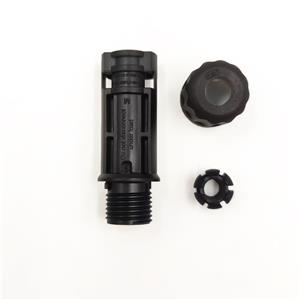
Solar MC4 connector reliability is not just a technical detail—it's a cornerstone of your PV system's safety, performance, and profitability. By understanding the pain points and implementing robust solutions, you can avoid costly failures and ensure your solar investments shine for decades. Remember, the quality of every component matters, and choosing the right partner is key. For more in-depth technical insights, download our white paper on connector reliability or contact our sales engineers at Xiamen 9Sun Solar Technology Co., Ltd. Let's power a sustainable future together, one reliable connection at a time.