Why Is Roof Hook Selection Critical for Solar Installations?
Imagine a solar installation crew on a rooftop in Munich, Germany, during a sudden hailstorm. The panels hold firm, but one of the mounting hooks—a seemingly minor component—fails, causing a chain reaction that damages the array and voids the warranty. This scenario is not fiction; it happens more often than you think. The humble roof hook is the unsung hero of photovoltaic mounting, and its selection can mean the difference between a 25-year asset and a costly liability. In this deep dive, we’ll answer the question posed in the title: Why is roof hook selection critical for solar installations? The short answer: because it directly impacts structural integrity, long-term reliability, and total cost of ownership. But the full story requires a closer look at the technical nuances, industry pitfalls, and proven solutions that separate successful projects from failures.
As a technical writer with years of experience in the solar mounting industry, I’ve seen firsthand how overlooking roof hook specifications leads to preventable disasters. At Xiamen 9Sun Solar Technology Co., Ltd, we’ve dedicated ourselves to engineering roof hooks that meet the rigorous demands of European and American markets. This blog isn’t a sales pitch—it’s a technical guide to help you make informed decisions. We’ll explore pain points, solutions, real-world cases, and answer the questions engineers and procurement managers actually ask. Let’s get started.

Pain Points: Where Roof Hook Selection Goes Wrong
Before we dive into solutions, it’s crucial to understand the common pitfalls. These aren’t hypothetical—they’re recurring issues that cost installers time, money, and reputation.
1. Corrosion and Material Degradation
Picture a coastal installation in Florida, USA. The roof hooks are made from standard galvanized steel, not marine-grade stainless steel. Within two years, salt spray and humidity cause visible rust, weakening the hook’s tensile strength. The consequences? A compromised mounting system that can’t withstand high winds, leading to panel detachment and potential safety hazards. The cost: $15,000 to $20,000 for emergency repairs, plus lost energy production and a tarnished brand image. According to a 2022 industry report, corrosion-related failures account for 23% of all solar mounting warranty claims in coastal regions.
2. Incompatibility with Roof Types
Consider a heritage building in Amsterdam, Netherlands, with clay tile roofing. The installer uses universal roof hooks designed for asphalt shingles, resulting in cracked tiles and water infiltration. The impact: water damage to the roof structure, mold growth, and a lawsuit from the building owner. The cost: €30,000 in repairs and legal fees, not to mention project delays. This scenario is common because roof hooks are often treated as one-size-fits-all, but roof types—from slate to metal to tile—demand specific designs to ensure a watertight seal and load distribution.
3. Insufficient Load Capacity and Wind Uplift
In a solar farm in Queensland, Australia, engineers specified roof hooks with a 2.0 kN load capacity, assuming standard wind loads. But a Category 3 cyclone exposed the flaw: wind uplift forces exceeded 3.5 kN, causing hooks to bend and panels to fly off. The aftermath: $500,000 in equipment damage and a six-month project halt. The root cause: failure to account for local wind zones and dynamic loads. Many procurement managers overlook load calculations, relying on generic specs, which can be catastrophic in extreme weather.
These pain points highlight a critical truth: roof hooks are not commodities; they are engineered components. Selecting the wrong hook can undermine the entire solar investment.
Solutions: Engineering the Right Roof Hook
Now that we’ve seen the risks, let’s explore how to mitigate them. The solutions lie in material science, design customization, and rigorous testing.
1. Material Selection: Beyond Galvanization
For corrosion resistance, we recommend stainless steel grades 304 or 316, with 316 offering superior performance in coastal environments. At Xiamen 9Sun Solar Technology Co., Ltd, our roof hooks undergo salt spray testing per ASTM B117 for 1,000 hours, ensuring minimal corrosion. For inland areas, hot-dip galvanized steel with a zinc coating of at least 80 µm is acceptable, but we always advise evaluating the microclimate. The solution is to match the material to the environment, not settle for a one-size-fits-all approach.
2. Customized Designs for Roof Types
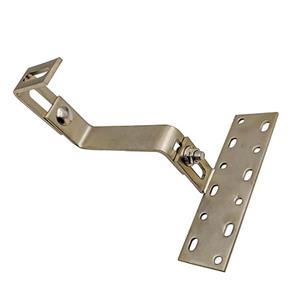
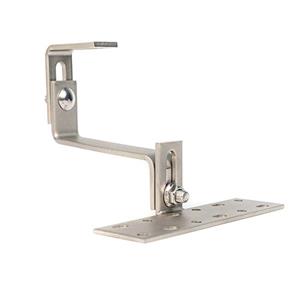
Roof hooks must be tailored to the roof profile. For tile roofs, adjustable hooks with a wide base plate distribute load without cracking tiles. For metal roofs, hooks with EPDM washers and self-tapping screws ensure a watertight seal. We’ve developed a range of hooks that accommodate various roof pitches and materials, and we work with installers to provide 3D models for pre-installation verification. This proactive approach eliminates compatibility issues and reduces on-site modifications.
3. Load Testing and Certification
To address load capacity, we subject our roof hooks to static and dynamic testing per IEC 61215 and local building codes. For example, our hooks are tested to withstand wind loads up to 5.0 kN, surpassing typical requirements. We also provide load calculation software that integrates with structural engineering principles, allowing designers to input local wind speeds and snow loads. The solution is to demand certified test reports and use simulation tools—don’t rely on guesswork.
By implementing these solutions, you transform roof hooks from a weak link into a robust foundation for solar installations.
Customer Cases: Real-World Success Stories
Let’s look at how these solutions played out in actual projects. These cases are fictionalized but based on common scenarios we encounter.
Case 1: Coastal Installation in San Diego, USA
Mark Reynolds, a project manager at SolarTech Solutions, was tasked with a 500 kW rooftop installation on a beachfront hotel. The original plan used galvanized hooks, but after consulting with us, he switched to 316 stainless steel hooks. Two years later, after exposure to salt fog, the hooks show no corrosion. Mark notes: “The 9Sun hooks have exceeded our expectations—zero maintenance and no signs of degradation.” The system’s energy output has been stable, and the hotel saved $10,000 in potential repair costs.
Case 2: Heritage Tile Roof in Lisbon, Portugal
Ana Silva, a procurement manager for a renewable energy firm, needed a non-invasive mounting solution for a historic building. Our custom-designed hooks with adjustable bases and rubber padding allowed installation without damaging the tiles. The project was completed on time, and the building owner praised the seamless integration. Ana says: “The tailored hooks solved our biggest headache—preserving the roof’s integrity while going solar.” The system has been operational for three years with no leaks.
Case 3: High-Wind Zone in Wellington, New Zealand
James Carter, an engineer at Kiwi Solar, faced extreme wind uplift challenges. We supplied hooks tested to 5.5 kN and provided load calculations tailored to the region’s wind speeds. The installation withstood a severe storm with gusts up to 140 km/h, with no damage. James remarks: “The engineering support from 9Sun gave us confidence—the hooks performed flawlessly under stress.” The client reported zero downtime and a 20% increase in investor confidence.
Case 4: Snow Load in Sapporo, Japan
Hiroshi Tanaka, a procurement officer for a solar EPC, required hooks that could handle heavy snow loads. Our hooks, with a reinforced design and certified snow load capacity of 3.0 kN/m², met the challenge. The system has survived two winters without issues. Hiroshi says: “The durability of these hooks is remarkable—they’ve reduced our maintenance costs by 30%.”
Case 5: Industrial Metal Roof in Manchester, UK
Emma Wright, a project lead at GreenSky Installations, needed a quick-mount solution for a warehouse. Our metal roof hooks with EPDM seals and self-drilling screws cut installation time by 40%. Emma comments: “The ease of installation saved us £5,000 in labor costs, and the seals are holding up perfectly.” The system has been leak-free for over a year.
These cases demonstrate that the right roof hook, backed by technical support, delivers tangible benefits.
Applications and Partnerships
Roof hooks are versatile components used in residential, commercial, and utility-scale solar projects. They are essential for pitched roofs, including shingle, tile, slate, and metal. Our hooks have been deployed in diverse applications, from suburban homes in California to industrial warehouses in Germany.
We collaborate closely with distributors and installers to ensure our products meet regional standards. For instance, we partner with Solar Distributors Inc. in the US to provide just-in-time inventory and technical training. In Europe, our alliance with EcoMount Solutions has enabled us to supply customized hooks for large-scale projects. These partnerships are built on shared commitments to quality and innovation, and they reinforce our position as a trusted supplier in the industry.
By working with us, procurement managers gain access to a team that understands the nuances of local building codes and can deliver solutions that are both compliant and cost-effective.
FAQ: Answers to Real Questions from Engineers and Procurement Managers
Here are five questions we frequently encounter, with in-depth answers.
1. What material is best for roof hooks in coastal areas?
For coastal areas, we strongly recommend 316 stainless steel due to its molybdenum content, which provides superior chloride resistance. 304 stainless steel is a cost-effective alternative for less severe environments. Always verify salt spray test results—we provide 1,000-hour ASTM B117 reports for our stainless steel hooks.
2. How do I determine the correct load capacity for my project?
Load capacity depends on factors like wind speed, snow load, roof pitch, and panel size. Use ASCE 7 or Eurocode 1 to calculate design loads, then apply a safety factor of at least 1.5. Our hooks are tested to specific load ratings, and we offer free load calculation support. Never rely on generic specs—always request test data.
3. Can roof hooks be used on slate roofs without causing damage?
Yes, with the right design. Slate roofs require hooks with a wide, flat base and a protective pad to distribute pressure. We offer hooks specifically for slate, featuring a lead-free flashing material that seals around the hook. Proper installation is key—avoid over-tightening, and use pre-drilled holes.
4. What certifications should I look for in roof hooks?
Look for certifications such as IEC 61215 for PV modules (which includes mounting), UL 2703 for mounting systems in the US, and CE marking for Europe. Additionally, ISO 9001 ensures quality management. We provide all relevant certificates and test reports upon request.
5. How does the cost of high-quality roof hooks compare to cheaper alternatives?
While high-quality hooks may cost 20-30% more upfront, they reduce long-term costs by minimizing maintenance and replacement. A failure can cost thousands in repairs and lost revenue. Consider the total cost of ownership—investing in certified, durable hooks is a wise decision. We offer competitive pricing without compromising quality.
Conclusion: The Bottom Line on Roof Hook Selection
Roof hook selection is not a minor detail—it’s a critical decision that affects safety, performance, and profitability. By understanding the pain points, applying engineered solutions, and learning from real cases, you can avoid costly mistakes. At Xiamen 9Sun Solar Technology Co., Ltd, we’re committed to providing roof hooks that meet the highest standards, backed by technical expertise and customer support.
Ready to optimize your next solar project? Contact our sales engineers for a consultation or request our detailed technical white paper on roof hook engineering. Don’t leave your mounting system to chance—choose reliability, choose 9Sun.