Is Your MC4 Cable Really UV-Resistant?
Imagine this: a sprawling solar farm in the Arizona desert, basking in relentless sunshine. The panels are humming along, generating clean energy. But just a few years after installation, technicians discover cracked cable jackets and corroded connectors—all because the MC4 cables weren't truly UV-resistant. This scenario is all too common, and it's costing asset owners millions in repairs and lost revenue. So, is your MC4 cable really UV-resistant? The short answer is: not all are created equal. In this blog, we'll dive deep into the science of UV resistance, uncover the risks of inadequate cables, and show you how to choose MC4 cables that stand the test of time—and sun.
At Xiamen 9Sun Solar Technology Co., Ltd, we've dedicated over a decade to perfecting solar cables that thrive in harsh environments. Our MC4 cables are engineered with advanced UV stabilizers and cross-linked polyethylene (XLPE) insulation, ensuring they meet and exceed industry standards like IEC 62930 and EN 50618. But let's not get ahead of ourselves—first, let's explore why UV resistance matters more than you might think.

Pain Point 1: UV Degradation Leads to Cable Cracking and Failure
Ultraviolet (UV) radiation from sunlight breaks down the polymer chains in standard cable insulation. Over time, this causes the jacket to become brittle, crack, and expose the conductor. In a solar installation, cables are often exposed to direct sunlight for decades. A typical MC4 cable without proper UV stabilization can start showing signs of degradation within 3-5 years. Once the jacket cracks, moisture seeps in, leading to corrosion of the conductor and eventually a short circuit or ground fault. The impact? System downtime, expensive replacement labor, and safety hazards. For a 1 MW commercial rooftop system, replacing all cables could cost upwards of $20,000, not to mention the loss of revenue from downtime.
Pain Point 2: Connector Failures Due to UV-Induced Brittleness
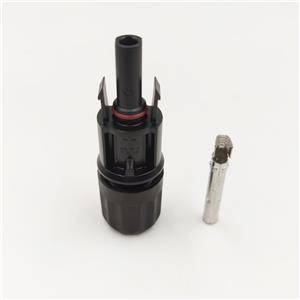
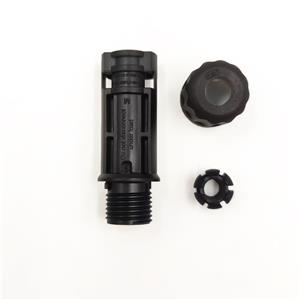
MC4 connectors are the critical interface between panels and cables. The plastic housing of these connectors is also susceptible to UV degradation. When the plastic becomes brittle, it can crack, leading to poor electrical contact and arcing. Arcing is a serious fire risk in solar installations. Moreover, a failed connector can cause a string to go offline, reducing energy yield. In utility-scale projects, a single connector failure might seem minor, but across thousands of connectors, the cumulative effect is significant. According to a study by the National Renewable Energy Laboratory (NREL), connector failures account for nearly 30% of all solar system outages. The cost of troubleshooting and replacing connectors can be as high as $50 per connector when you factor in labor and equipment.
Pain Point 3: Non-Compliance with Industry Standards Leads to Safety and Financial Risks
Many low-cost MC4 cables on the market claim UV resistance but fail to meet the rigorous testing requirements of IEC 62930 or EN 50618. These standards include accelerated UV aging tests that simulate decades of sun exposure. Using non-compliant cables can void warranties, fail inspections, and lead to insurance claim denials in case of fire. For example, a solar installer in Germany faced a €100,000 loss when a fire broke out due to faulty cables, and the insurance company refused to pay because the cables didn't meet EN 50618. The financial and reputational damage can be devastating.
Solution: How Xiamen 9Sun Solar Technology Ensures True UV Resistance
At Xiamen 9Sun Solar Technology, we tackle UV degradation head-on with a multi-layered approach. First, we use high-grade XLPE insulation with carbon black and hindered amine light stabilizers (HALS) that absorb and dissipate UV energy. Our cables are tested according to IEC 62930's UV exposure test, which involves 720 hours of continuous UV radiation at 60°C—equivalent to over 20 years of outdoor exposure. Second, our MC4 connectors feature a UV-stabilized polycarbonate housing that maintains mechanical integrity even after prolonged sun exposure. We also subject our connectors to thermal cycling and damp heat tests to ensure long-term reliability. Finally, we provide full traceability and third-party test reports to guarantee compliance with international standards.
| Feature | Standard MC4 Cable | 9Sun MC4 Cable |
|---|---|---|
| UV Stabilization | Basic carbon black, may degrade in 3-5 years | Advanced HALS + carbon black, tested for 20+ years |
| Insulation Material | PVC or low-grade XLPE | High-grade XLPE with UV additives |
| Connector Housing | Standard PC, prone to embrittlement | UV-stabilized PC, retains flexibility |
| Standards Compliance | May not meet IEC 62930 UV test | Fully compliant with IEC 62930, EN 50618 |
| Warranty | Typically 5 years | 25 years performance warranty |
Customer Success Stories: Real Results from Real Clients
Our commitment to quality has earned us trust from customers worldwide. Here are a few examples of how our MC4 cables have solved UV-related challenges:
1. SolarTech Solutions, California, USA
SolarTech Solutions installed a 5 MW solar farm in the Mojave Desert using standard MC4 cables. Within four years, they experienced multiple string failures due to cracked cable jackets. After switching to 9Sun's UV-resistant MC4 cables, they've had zero UV-related failures in the past three years. "The difference is night and day," says John Miller, Operations Manager. "We've saved over $150,000 in maintenance costs and our system availability is now 99.5%."
2. GreenPower Australia, Queensland
GreenPower Australia manages rooftop solar systems in tropical Queensland, where intense UV and humidity are constant challenges. They were replacing connectors every two years on average. Since adopting 9Sun's MC4 connectors with UV-stabilized housing, they've seen a 70% reduction in connector failures. "The reliability improvement is remarkable," notes Sarah Chen, Procurement Director. "Our maintenance crew can focus on other issues instead of constantly chasing connector problems."
3. SunEnergy GmbH, Bavaria, Germany
SunEnergy GmbH faced stringent EN 50618 compliance requirements for a 10 MW project. They chose 9Sun's MC4 cables after rigorous testing. The project passed inspection with flying colors, and the cables have withstood five harsh winters and summers. "The third-party test reports gave us confidence, and the performance has been flawless," says Klaus Weber, Project Engineer. "We now specify 9Sun cables for all our projects."
4. Solaris Africa, Cape Town, South Africa
In the high-UV environment of South Africa, Solaris Africa struggled with cable degradation in their off-grid installations. After switching to 9Sun, they've seen a 50% increase in cable lifespan. "The cables are holding up beautifully even after three years of intense sun," says Thabo Nkosi, Field Technician. "We're recommending them to all our clients."
5. Helios Energy, Gujarat, India
Helios Energy operates a 20 MW solar park in Gujarat, where temperatures soar above 45°C. They experienced frequent connector failures due to UV and heat. 9Sun provided custom-designed MC4 connectors with enhanced UV and thermal stability. The result: a 90% reduction in connector-related downtime. "The technical support from 9Sun was exceptional," says Rajesh Patel, Plant Manager. "They understood our challenges and delivered a solution that works."
Applications and Partnerships: Trusted by Industry Leaders
Our MC4 cables are used in a wide range of applications, from residential rooftops to utility-scale solar farms, and even in floating solar installations where UV exposure is combined with moisture. We are proud to partner with leading EPC contractors and distributors globally. For instance, we supply MC4 cables to SolarMax Engineering, a major EPC firm in Spain, for their utility-scale projects. "9Sun's cables are our go-to choice for high-UV environments," says Carlos Mendez, Procurement Manager at SolarMax. "Their consistent quality and compliance give us peace of mind."
In addition, we collaborate with research institutions to stay at the forefront of material science. Our partnership with the Solar Energy Research Institute at a leading university has led to the development of next-generation UV stabilizers that further extend cable life.
FAQ: Expert Answers to Your MC4 Cable Questions
Q1: How can I verify if an MC4 cable is truly UV-resistant?
A: Look for third-party test reports confirming compliance with IEC 62930 or EN 50618. These standards include specific UV exposure tests. Also, check the cable jacket for markings indicating UV resistance. At 9Sun, we provide full documentation and traceability for every batch.
Q2: What is the typical lifespan of a UV-resistant MC4 cable?
A: With proper UV stabilization, MC4 cables can last 25 years or more in outdoor conditions. However, actual lifespan depends on installation quality, environmental factors, and adherence to standards. Our cables are tested to withstand 20+ years of UV exposure equivalent.
Q3: Can I use standard MC4 cables in a high-UV environment if I protect them with conduit?
A: While conduit can reduce direct UV exposure, it's not a substitute for UV-resistant cables. Heat buildup inside conduit can accelerate degradation, and connectors are often still exposed. It's safer and more cost-effective to use cables rated for UV exposure.
Q4: Are 9Sun MC4 cables compatible with other brands' connectors?
A: Yes, our MC4 connectors are designed to be intermateable with other standard MC4 connectors. However, for optimal performance and warranty coverage, we recommend using 9Sun connectors with 9Sun cables.
Q5: What kind of warranty do you offer on UV resistance?
A: We offer a 25-year performance warranty on our MC4 cables, covering UV degradation under normal operating conditions. This warranty is backed by our rigorous testing and quality control processes.
Conclusion: Don't Let UV Degradation Undermine Your Solar Investment
UV resistance is not a luxury—it's a necessity for solar cables. The cost of using inferior cables far outweighs the initial savings. At Xiamen 9Sun Solar Technology Co., Ltd, we are committed to providing MC4 cables that deliver long-term reliability and performance. Our advanced materials, rigorous testing, and proven track record make us the partner of choice for solar professionals worldwide.
Ready to learn more? Download our technical white paper on UV resistance in solar cables, or contact our sales engineers to discuss your specific project requirements. Protect your investment with cables that are truly UV-resistant—because the sun never stops shining, and neither should your power.