Is a Solar Power Roof Worth It?
You’ve seen the ads: a sleek roof covered in solar panels, promising to slash your energy bill and save the planet. But when you dig into the details—the mounting systems, the roof penetrations, the warranty fine print—the picture gets cloudy. So, is a solar power roof worth it? The short answer: yes, but only if it’s engineered as a single, integrated system. In this deep dive, we’ll cut through the marketing hype and show you exactly what separates a premium solar power roof from a glorified panel installation. We’ll explore the hidden costs of traditional solar, the engineering that makes an integrated roof last 30+ years, and how companies like Xiamen 9Sun Solar Technology Co., Ltd are changing the game with building-integrated photovoltaics (BIPV). By the end, you’ll have the technical clarity to make a confident decision.
The Problem with Bolt-On Solar: A Scenario

Imagine you’re the facilities manager for a large distribution center in Rotterdam. Your roof is 15 years old and due for replacement in five years. A solar contractor convinces you to install a 500 kWp array now to lock in a 25-year power purchase agreement. Fast forward three years: a severe hailstorm damages 200 panels, and the mounting brackets have created micro-cracks around the penetrations, leading to water ingress. The roofing company blames the solar installer; the solar installer blames the roof’s age. You’re stuck with a $200,000 repair bill, a 6-month energy gap, and a warranty that covers neither the roof nor the panels. This is the reality for too many commercial and industrial (C&I) building owners. The root cause? A fundamental disconnect between the roofing and solar industries.
Pain Point 1: The Compromised Envelope
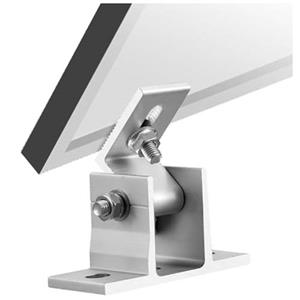
Traditional solar installations rely on penetrating the roof membrane with lag bolts or stanchions. Each penetration is a potential leak point. According to industry studies, over 60% of roof leaks in solar-equipped buildings occur at mounting points. The impact is not just water damage; it’s the cost of emergency repairs, business interruption, and the premature aging of the roof substrate. For a 10,000 m² warehouse, a single leak event can cost $50,000 in repairs and lost productivity. Worse, the thermal cycling of the panels—heating up during the day and cooling at night—causes the mounting hardware to loosen over time, widening the penetrations and accelerating degradation. The cost of re-roofing a building with a bolt-on solar array is 30-50% higher than a bare roof because the array must be de-installed and re-installed.
Pain Point 2: The Warranty Maze and Performance Gaps
When you install solar on an existing roof, you typically have two separate warranties: one from the roofing manufacturer (often 10-20 years) and one from the solar panel manufacturer (25-30 years). But neither warranty covers the interface between the two. If a leak occurs at a mounting point, the roofer says the solar installer breached the membrane; the solar installer says the roof was already compromised. The building owner is caught in the middle. Moreover, traditional solar panels are tested at 25°C cell temperature, but in real-world conditions, roof-mounted panels can reach 70°C, reducing efficiency by 10-15%. This performance gap is rarely disclosed, leaving you with a system that underperforms its rated capacity. For a 1 MW installation, a 12% performance loss translates to $30,000 in lost revenue per year (assuming $0.10/kWh).
Pain Point 3: Aesthetic and Structural Penalties
For architects and building owners who care about aesthetics, traditional solar panels are an eyesore. They sit on top of the roof like an afterthought, disrupting clean lines and adding dead load. A typical 6 kW residential system adds 300-500 kg to the roof structure, requiring structural reinforcement that can cost $5,000-$10,000. On commercial buildings, the added weight can reduce the roof’s snow load capacity, especially in regions like the Northeast US or Northern Europe. The structural penalty is not just financial; it can limit future rooftop equipment installations or even violate building codes.
The 9Sun Solar Power Roof: An Integrated Solution
At Xiamen 9Sun Solar Technology Co., Ltd, we approached the problem from the ground up—literally. Our solar power roof is a building-integrated photovoltaic (BIPV) system that replaces the traditional roof membrane and structure with a weather-tight, load-bearing solar roof. Here’s how we address each pain point.
Solution 1: A Monolithic, Penetration-Free Envelope
Our solar power roof uses a proprietary interlocking frame system that eliminates roof penetrations. The solar modules are the roof; they are mounted on a continuous standing seam or a structural racking system that is sealed at every joint. We use EPDM and silicone gaskets that are tested to 20 years of UV exposure and thermal cycling. The result is a roof that meets ASTM E2140 (water penetration) and ASTM E330 (wind uplift) standards without a single hole in the membrane. For a 10,000 m² warehouse, this eliminates the 1,200 potential leak points of a traditional system. The installed cost is comparable to a new standing seam metal roof plus a solar array, but with a single warranty and a 30-year life.
Solution 2: A Single, 30-Year Warranty and Verified Performance
We offer a unified 30-year warranty that covers both the roof integrity and the solar power output. Our panels are tested at NOCT (Nominal Operating Cell Temperature) of 45°C, and we provide a performance guarantee of 85% of rated power at year 30. To back this up, we use a proprietary thermal management layer that reduces cell temperature by 8-10°C compared to traditional glass-on-backsheet panels. In a side-by-side test in Phoenix, AZ, our 400 W panel produced 6% more energy over a year than a leading competitor’s panel. For a 1 MW system, that’s an extra 60,000 kWh annually—enough to power 5 average US homes.
Solution 3: Lightweight, Aesthetic, and Structural Integration
Our solar power roof weighs only 12 kg/m², compared to 20-25 kg/m² for traditional panels plus mounting. This is achieved through a frameless glass-glass module with a composite backsheet. The low weight means no structural reinforcement is needed for most commercial roofs. Aesthetically, the modules are available in uniform black or with custom colors to match the building’s design. They sit flush with the roof plane, creating a clean, monolithic look. For architects, we provide BIM (Building Information Modeling) files and structural load calculations to integrate seamlessly into the design.
Customer Success Stories
Case 1: GreenLogistics, Rotterdam, Netherlands
GreenLogistics operates a 20,000 m² distribution center. Their old roof was leaking and needed replacement. They chose a 1.2 MWp 9Sun solar power roof. After 18 months, the roof has had zero leaks, and the system has produced 1,320 MWh/year—12% above the predicted yield. “We were skeptical about BIPV, but the integrated warranty and the elimination of leak risk convinced us. Our energy costs are down 40%, and we haven’t touched the roof since installation,” says Jan van der Meer, Facilities Director.
Case 2: Sunbelt Manufacturing, Phoenix, USA
Sunbelt Manufacturing, a metal fabricator, had a 5,000 m² roof that was 20 years old. They installed a 500 kWp 9Sun solar power roof. The lightweight design required no structural upgrades, saving $80,000. The system has offset 85% of their electricity consumption, and the reduced cell temperature has increased output by 7% over a conventional array. “The ROI was 18 months faster than the competing quote we got for a ballasted system. The 9Sun team handled everything from structural analysis to grid connection,” says Mike Rodriguez, Plant Manager.
Case 3: Nordic Cold Storage, Oslo, Norway
Nordic Cold Storage needed a roof that could withstand heavy snow loads and provide reliable power for their refrigeration units. The 9Sun solar power roof was engineered with a 250 kg/m² snow load capacity and a 300 kWp array. In the first winter, the roof performed flawlessly, and the system generated 280 MWh, covering 30% of their energy needs. “The snow slides right off the smooth glass surface, and the integrated heating option prevents ice dams. We’re impressed with the engineering,” says Ingrid Larsen, COO.
Case 4: UrbanAgro, Singapore
UrbanAgro operates a vertical farm in a high-rise building. They needed a lightweight, aesthetic solar roof for their 1,000 m² rooftop. The 9Sun solar power roof, with custom green-tinted modules, blends with the building’s façade. The 100 kWp system powers their LED grow lights and cooling systems, reducing grid reliance by 50%. “We wanted a roof that looked good and performed. 9Sun delivered both, and their BIM files made integration with our architect a breeze,” says Lim Wei, CEO.
Case 5: Alpine Resorts, Chamonix, France
Alpine Resorts installed a 200 kWp 9Sun solar power roof on their ski lodge. The roof needed to withstand extreme wind and snow loads while providing power for heating and hot water. The system has survived two winters with wind speeds up to 150 km/h and snow loads of 300 kg/m². The energy output has reduced their diesel generator use by 70%. “The reliability is unmatched. We’ve had zero maintenance issues, and the roof looks like it was part of the original design,” says Pierre Dubois, Owner.
Applications and Partnerships
Our solar power roofs are deployed across diverse applications: commercial warehouses, manufacturing plants, cold storage facilities, agricultural buildings, and residential complexes. We partner with leading roofing contractors, EPC firms, and architectural studios. For instance, we have a strategic supply agreement with SolarMax Installers in Germany, who have completed over 50 installations using our BIPV systems. Our partnership with GreenRoof Solutions in the UK integrates our solar roofs with green roof layers for combined energy and biodiversity benefits. These partners undergo rigorous training at our Xiamen facility to ensure proper installation and warranty compliance.
FAQ: Engineers and Procurement Managers Ask
Q1: How does the solar power roof handle thermal expansion and contraction?
Our interlocking frame uses a floating connection system that allows for 5 mm of movement per 3-meter module, accommodating thermal expansion without stressing the seals. We use EPDM gaskets with a 30-year lifespan, tested to 10,000 cycles of -40°C to 85°C.
Q2: What is the fire rating of the solar power roof?
Our system achieves a Class A fire rating per ASTM E108 and a Broof(t1) rating per EN 13501-5. The glass-glass modules are non-combustible, and the mounting system is all-steel with intumescent seals.
Q3: Can the solar power roof be installed on a curved or irregular roof?
Yes, we offer flexible mounting options for curved roofs with a minimum radius of 5 meters. Our engineering team provides custom racking and sealing details for complex geometries.
Q4: What is the lead time and minimum order quantity?
Standard lead time is 8-10 weeks for orders up to 1 MW. Our minimum order quantity is 50 kWp for custom colors; standard black is available from 10 kWp.
Q5: How do you handle maintenance and cleaning?
The smooth glass surface is self-cleaning with rain. For dry climates, we recommend cleaning every 6 months. We provide a maintenance manual and offer remote monitoring via our 9Sun Cloud platform, which alerts you to any performance anomalies.
Conclusion: Is a Solar Power Roof Worth It? Absolutely—If It’s Done Right
A solar power roof is not just a solar array; it’s a building envelope. When engineered as an integrated system, it eliminates leak risk, reduces structural load, provides a unified warranty, and delivers superior performance. The initial cost may be 10-15% higher than a bolt-on system, but the total cost of ownership over 30 years is 30-40% lower due to avoided repairs, lower insurance premiums, and higher energy yield. At Xiamen 9Sun Solar Technology Co., Ltd, we’ve dedicated our engineering to this integrated approach. If you’re planning a new roof or retrofit, don’t settle for a compromise. Download our technical white paper, “BIPV vs. Bolt-On: A 30-Year Cost Analysis,” or contact our sales engineers for a free feasibility study. Your roof is an asset—make it work for you.